
Endometriosis Naturopath Brisbane
Without addressing underlying drivers of endometriosis, using surgeries to manage symptoms is like painting over rust – the surface looks better, but the damage is still spreading underneath.
About Endometriosis
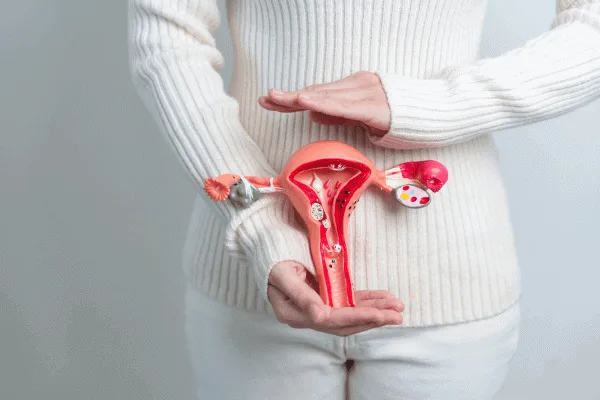
Endometriosis is a significant women’s health issue, affecting around 1 in 9 women of reproductive age. Despite this, it takes an average of 7–10 years to receive a diagnosis. Too often, women are told that period pain is “normal.” It isn’t.
Beyond pelvic pain, endometriosis can impact the whole body. Many women that I have supported also experience chronic fatigue, brain fog, digestive disturbances, nutrient deficiencies, and mental health challenges, all which are managed poorly with mainstream treatments. These symptoms are debilitating and affect quality of life far beyond the menstrual cycle.
Research into endometriosis is growing, and we’re beginning to learn more about its complexity. However, conventional treatments — primarily surgery and hormonal therapies — have remained largely unchanged for years. While these options can provide relief, they don’t always address the underlying drivers unique to each individual.
In natural medicine, we look at two key mechanisms often associated with endometriosis: estrogen dominance and immune dysfunction. Rather than simply managing endometriosis symptoms, we work to uncover what might be triggering these imbalances in your body. By addressing these root causes, the goal of treating endometriosis is to calm the “fire” (inflammation and immune dysregulation) and restore balance (with estrogen), so the body can function optimally.
Causes of Endometriosis
Causes of endo are debated, and frankly not yet known, but the underlying drivers are widely recognised – they are:
| Underlying driver | Holistic ‘root cause’ |
| Estrogen imbalance -Endo is an estrogen- dependent condition (chantalat et al., 2020), which is why primarily women are affected, particularly in their menstruating years when estrogen is high. | Certain medications with estrogenic effects. Examples are:
Environmental toxins, known as xeno-estrogens, which mimic estrogen in the body and add to excess (Valdes-Devesa et al., 2024). Examples of xeno-estrogens include plastics, certain herbicides and pesticides, and many chemicals found in cosmetics and cleaning products. Other hormonal imbalances – to keep estrogen “in check”, there’s ‘feedback’ loops that happen in the body; specifically other hormones like cortisol, thyroid hormones and ovulation hormones (like LH, FSH & progesterone), which regulate estrogen levels and can sometimes be miscommunicating, affecting estrogen balance. Nutrient deficiencies can affect the balance of estrogen & detoxification pathways affecting how estrogen is cleared in the body. Common deficiencies are magnesium, B vitamins, antioxidants & indole-3-carbinol (Preed & Watson, 2015). Poor gut and liver health – these two organs are responsible for breaking down and removing any excess or unwanted estrogen, and there’s a new area of study called the ‘estrobolome’ which is linking changes in these organ functions to estrogen excess issues (Sallis et al., 2022). |
| Immune dysfunctionThe immune system is ‘trapped’ in inflammatory pathways, causing pain, inflammation and scar tissue. This scar tissue has been found in the fallopian tubes, ovaries, uterus, gastrointestinal tract, and even the lungs and brain. A study by Li et al in 2023 writes that current evidence supports the fact that immune cells, such as macrophages, natural killer (NK) cells, dendritic cells (DCs), neutrophils, T cells, and B cells, as well as cytokines and inflammatory mediators, contribute to the vascularisation and fibrogenesis of endometriotic lesions, accelerating the implantation and development of ectopic endometriosis lesions. | Causes of immune dysfunction include: A change in the gut microbiome – the microbiome is the ‘foundation’ to the immune system (Astafeva et al., 2024 & Wong et al., 2023). A change in the pelvic microbiome (Li et al., 2023) - the pelvic microbiome can be home to inflammatory bacteria which can cause inflammation and scar tissue formation. Stress & HPA dysfunction (Facchin et al., 2020) - stress hormones play a role in inflammatory & pain pathways in the body. Food and environmental allergies and intolerances – this is more of an ‘association’, and I have particularly noticed gluten issues affect pelvic pain specifically, with the theory being reducing food sensitives will improve gut health and reduce inflammation. Stealth infections, many bacterial infections (like Fusobacteriums) are being linked to endo (Muraoka et al., 2023). Nutrient deficiencies (Munteanu & Schwartz 2022) – such as vitamin C, zinc, vitamin D and antioxidants like glutathione. Environmental toxins including heavy metals, plastics & xeno-estrogens. Cadmium (Hall et al., 2023), Phthalates, and BPA have an increased endo risk (Conforti et al., 2021). |
| Genetics | Currently, there are over 40 genes implicated in endometriosis (Saha et al., 2015). |
Naturopathic Treatment for Endometriosis
Our naturopathic approach to endometriosis focuses on identifying and addressing the root causes, rather than just managing symptoms. The consultative process is designed to educate, provide clarity, and create personalised guidance, and ongoing support for healthy, balanced hormones.
Step 1 – Initial Consultation
Your first session is a comprehensive review of your health. We explore your main concerns and look at all aspects of wellbeing, including diet, lifestyle, environment, gut health, hormone balance, and nervous system function. We’ll also discuss testing options, such as blood tests, saliva or urine hormone panels, gut microbiome analysis, and other targeted investigations, to identify underlying triggers of estrogen dominance and immune dysfunction.
Common tests/investigations
| Gut health | A functional gut microbiome test, called a complete microbiome mapping will review the connection between the gut-hormone axis |
| Nutrient deficiencies | Pathology testing, hair mineral and heavy metal analysis can identify imbalances |
| Stress and adrenal issues | Pathology testing, DUTCH testing, and/or saliva hormone test |
| Hormonal imbalances (including blood sugar/insulin, ovulation, & thyroid issues) | Pathology testing, DUTCH and/or saliva hormone testing |
| Lifestyle and environmental factors | Diet and/or lifestyle diaries, environmental questionnaires |
| Medication review | We often refer back to your primary care physician to assess any medication impact |
Step 2 – Review & Individualised Treatment Plan
Once testing is complete, we meet again to review the findings in detail. Together, we discuss how these factors may be impacting your health and create a personalised treatment protocol. This plan may include dietary and lifestyle interventions, herbal medicine, nutritional supplements, and other supportive strategies tailored specifically to your needs.
Naturopathic guidelines for endo include (remember, everyone is unique so you won’t need to treat all of these):
- Provide symptomatic pain relief if required
- Provide sympomatic menstruation relief (for heavy, clotty perisd) if required
- Addressing drivers of inflammation – diet, environment, gut health, hormonal health
- Balancing stress & adrenal function
- Treating estrogen excess
- Addressing other hormonal imbalances
- Creating a healthy home environment
- Eating a balanced diet
Step 3 – Ongoing Support & Monitoring
Managing endometriosis requires ongoing care. Follow-up consultations, typically spaced 4–8 weeks apart, allow us to monitor progress, make adjustments, and provide guidance as your body responds. Regular support ensures your treatment evolves with you and addresses your symptoms effectively over time.
Endometriosis is a chronic condition, and takes time to improve symptoms – my main goal is to have a 50% improvement in your pain within three months.
FERTILITY
Some women with endometriosis also experience challenges with fertility. The inflammation, hormonal imbalances, and immune dysregulation associated with endometriosis can impact egg quality, ovulation, and implantation. Naturopathic care aims to support reproductive health by addressing these underlying factors, optimising your hormones, reducing inflammation, and enhancing overall fertility. Whether you are preparing to conceive naturally or alongside assisted reproductive treatments, our goal is to give your body the best possible foundation for a healthy pregnancy.
Your Endometriosis Questions Answered
I’m on the pill/mirena, can I still work with a naturopath?
Of course… All potential contraindications with your medication are carefully checked first to make sure everything we do is safe. From there, we can focus on supporting the pathways that your medication doesn’t target — such as reducing inflammation, balancing nutrient status, improving gut and liver function, and addressing underlying drivers of pain. This means we can complement your current management, rather than replace it, and help you feel more supported overall.
How long does it take to see improvement of pain?
Every body is different. Endo is a complex condition, and so treatment is expected to take a little longer. I aim for a 50% improvement of pain within the first three months.
How often do I have to see you?
Again, this is different for everyone. Most clients meet up with me monthly in the beginning, and then we can spread consultations out to every 6-8-12 weeks depending on your response to treatment. I have many long term clients who like to check in with me once or twice a year when they are feeling well.
What natural treatments are there to manage pain?
We have some amazing herbs and nutrients that I use in clinic and find incredibly effective – common ones that I use include curcumin, boswellia, cramp bark, willow bark, saffron and coydalis, as well as the nutrients Magnesium Glycinate & P.E.A. All can be used alongside any conventional pain medication. The best thing I have found to manage pain is to address the source of inflammation – which I often find is coming from the diet and the gut..!
The people/specialists around me don’t believe in naturopathy and have advised me against seeking natural support for endometriosis symptoms?
It’s valuable to understand the history of both natural and modern medicine. While modern medicine, as we know it today, was shaped in the early 1900s, natural medicine had been the primary form of healthcare for thousands of years before that. In fact, prior to the 1900s, natural medicine was widely practiced, taught in schools, and even used in hospitals, with more than half of practitioners working in this field. We also have extensive historical documentation showing both its safety and effectiveness, with traditions dating back to the earliest human civilisations.
Since the 1910s, however, medical education has carried a bias against natural approaches — a stigma that still lingers today – but know that modern naturopaths carry a Health Science Bachelor Degree, and practice evidence-based treatments. Natural medicines efficacy has not only been proven with our traditional history, but there are many scientific studies to back this up. If someone is disagreeing with natural treatment, know that it is their bias and stigma, not an evidence based fact.
Why Naturopathy and Why Choose Us?
Accredited & Experienced Practitioner
You’re in safe hands. As a fully accredited naturopath, I follow professional standards and stay up-to-date with the latest research and best practices in natural medicine. Your care is guided by expertise and integrity.
Personalised Treatments From A Practitioner That Truly Cares
We understand that health journeys are personal and sometimes challenging. We take the time to listen, understand your unique situation, and provide compassionate, holistic support tailored specifically to you.
Evidence-Based, Results-Oriented Treatments
Our recommendations are grounded in scientific evidence and clinical experience. We combine the wisdom of natural medicine with modern research to create treatments that are safe, effective, and targeted to your individual needs.
Let's figure out your root cause together, and use treatments that aren’t bandaid treatments.
REFERENCES
Albers, P., Maležíková, J., & Merker, A. (2001). Effects of oral and transvaginal ethinyl estradiol on hemostatic and estrogen-sensitive hepatic proteins. The Journal of Clinical Endocrinology & Metabolism, 86(11), 5166-5171. https://doi.org/10.1210/jcem.86.11.5166
Astafyeva, O., et al. (2024). Gut microbiome in endometriosis: A cohort study on 1000 individuals. BMC Medicine, 22, 232. https://doi.org/10.1186/s12916-024-03503-y
Chiorean, D. M., Mitranovici, M.-I., Toru, H. S., Cornelia Cotoi, T., Tomuț, A. N., Turdean, S. G., & Cotoi, O. S. (2023). New insights into genetics of endometriosis — A comprehensive literature review. Diagnostics, 13(13), 2265. https://doi.org/10.3390/diagnostics13132265
Conforti, A., Mascia, M., Cioffi, G., et al. (2021). Unravelling the link between phthalate exposure and endometriosis in humans: A systematic review and meta-analysis. Journal of Assisted Reproduction and Genetics, 38(10), 2543–2557. https://doi.org/10.1007/s10815-021-02265-3
Facchin, F., et al. (2020). The link between stress and endometriosis: From animal models to clinical evidence. Current Obstetrics and Gynecology Reports, 9, 45–55. https://doi.org/10.1007/s43032-020-00205-7
Hall, M. S., Talge, N. M., & Upson, K. (2023). Urinary cadmium and endometriosis prevalence in a US nationally representative sample: Results from NHANES 1999–2006. Human Reproduction, 38(9), 1835–1842. https://doi.org/10.1093/humrep/dead117
Kuryłowicz, A. (2023). Estrogens in adipose tissue physiology and obesity-related dysfunction. Biomedicines, 11(3), 690. https://doi.org/10.3390/biomedicines11030690
Lello, S., & Capozzi, A. (2012). Characteristics and metabolic effects of estrogen and progestins in combined oral contraceptives. Reviews in Endocrine and Metabolic Disorders, 13(5), 283–292. https://doi.org/10.1007/s11154-012-9225-5
Li, X., Zhang, Y., & Chen, Y. (2023). Peritoneal immune microenvironment of endometriosis: Role and dysfunction of immune cells. Frontiers in Immunology, 14, 1134663. https://doi.org/10.3389/fimmu.2023.1134663
Munteanu, C., & Schwartz, B. (2022). The relationship between nutrition and the immune system. Frontiers in Nutrition, 9. https://doi.org/10.3389/fnut.2022.1082500 Frontiers
Muraoka, A., Suzuki, M., Hamaguchi, T., et al. (2023). Fusobacterium infection facilitates the development of endometriosis through the phenotypic transition of endometrial fibroblasts. Science Translational Medicine, 15(700), eadd1531. https://doi.org/10.1126/scitranslmed.add1531
Preedy, V. R., & Watson, R. R. (Eds.). (2015). Detoxification, nutrigenomics and disease prevention. Academic Press.
Sallis, M. E., Farland, L. V., Mahnert, N. D., & Herbst-Kralovetz, M. M. (2022). Role of gut and genital microbiota and the estrobolome in endometriosis, infertility and chronic pelvic pain. Human Reproduction Update, 28(1), 92–131.
Valdés-Devesa, V., Sanz-Rosa, D., Thuissard-Vasallo, I. J., Andreu-Vázquez, C., & Sainz de la Cuesta, R. (2024). Xenoestrogen concentration in women with endometriosis or leiomyomas: A case-control study. PLOS ONE, 19(6), e0304766. https://doi.org/10.1371/journal.pone.0304766
Wong, A., et al. (2023). Gut Microbiome–Estrobolome profile in reproductive-age women with gynecologic disorders. International Journal of Molecular Sciences, 24(22), 16301. https://doi.org/10.3390/ijms242216301